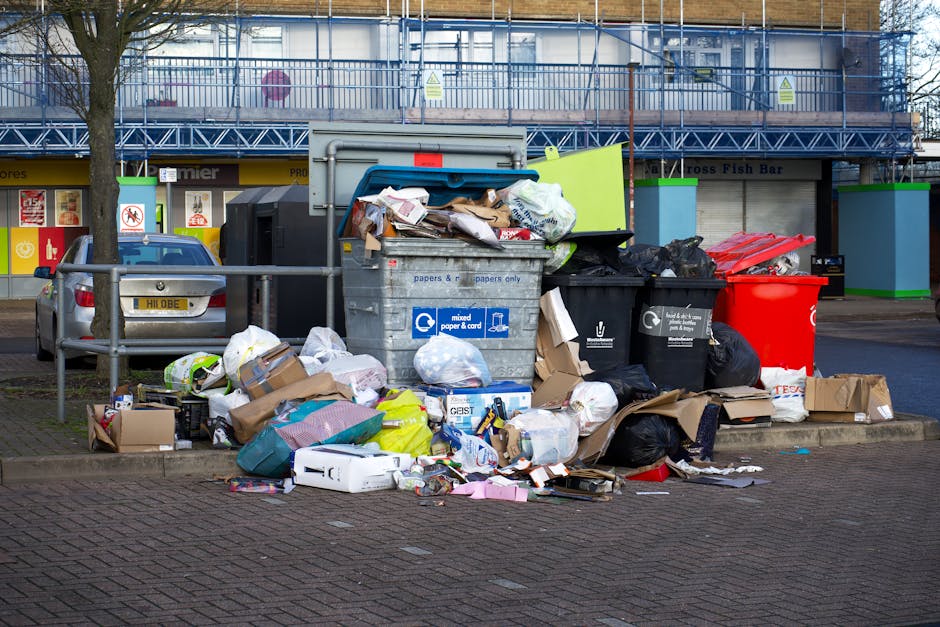
What to know about same day rubbish collection Central London
If you need clutter gone today, same day rubbish collection in Central London can feel like a small miracle. One moment you are staring at a hallway full of broken furniture, builder's offcuts, or black bags that should never have sat there in the first place; the next, the space is clear and you can actually breathe again. That is the appeal. But there is more to it than speed alone.
In busy central areas, time, access, parking, traffic, and building rules all affect how fast rubbish can be removed. So if you are comparing options, trying to avoid a messy overrun, or simply want a reliable plan for the day, this guide breaks down what to know about same day rubbish collection Central London in plain English. You will find how it works, what affects timing, common mistakes, and what to check before you book. No fluff. Just the useful stuff.
Table of Contents
- Why same day rubbish collection matters in Central London
- How same day rubbish collection works
- Key benefits and practical advantages
- Who this is for and when it makes sense
- Step-by-step guidance
- Expert tips for better results
- Common mistakes to avoid
- Tools, resources and recommendations
- Law, compliance, standards and best practice
- Options, methods, and comparison table
- Case study or real-world example
- Practical checklist
- Conclusion
- Frequently asked questions
Why same day rubbish collection matters in Central London
Central London is not built for delay. Tight streets, limited parking, loading restrictions, controlled access, and constant footfall make waste removal a bit more delicate than people first expect. That is why same day rubbish collection matters: it solves a problem quickly, but it also needs to fit the realities of the area.
In practice, speed is only useful if the collection is done properly. A pile of rubbish outside a flat in Central London might be fine for ten minutes, but not for long. In shared buildings, hallways need to stay clear. In offices, waste left too long can make the place feel untidy and get in the way of staff or visitors. On building sites, an unmanaged pile can become a safety issue very quickly. Truth be told, the pressure to clear space often arrives at the worst possible moment, usually right before a handover, inspection, or move.
There is also the simple comfort factor. A flat that is half-filled with old furniture, packaging, or broken items does not feel calm. Same day collection gives you a reset point. That is useful whether you are a homeowner, landlord, tenant, shop owner, or contractor trying to keep a project moving.
Expert summary: same day rubbish collection is most valuable when speed, access, and disposal compliance all matter at once. If one of those three falls apart, the whole thing becomes more stressful than it should be.
How same day rubbish collection works
The process is usually straightforward, but the details matter. Most same day services begin with an enquiry, a description of what needs removing, and a rough idea of volume. You may be asked for photos. That is not just admin for the sake of it; it helps assess how many people are needed, what vehicle size fits, and whether the load includes anything awkward such as heavy furniture, bulky waste, or builder's debris.
For example, a few bin bags from a declutter are very different from a kitchen strip-out. If you are dealing with a project that includes rubble, plasterboard, timber, or mixed debris, a provider may steer you toward builders waste clearance rather than a general junk pickup. Likewise, a workplace clear-out may sit better under office clearance or a broader business waste service.
On the day, the team normally arrives, checks access, confirms the load, and then removes items from the property or kerbside where legally and practically possible. In Central London, that last point is important. It is not always as simple as dragging things to the pavement. Stairs, narrow entrances, lift restrictions, concierge rules, and loading bays can all shape the job.
After collection, the waste is sorted for reuse, recycling, or disposal. You should expect a proper operator to think about waste handling rather than treating everything as one giant pile. A lot of people assume "rubbish removal" and "waste disposal" are interchangeable. They are related, yes, but the collection process and the end destination are not the same thing. Good operators manage both sides carefully.
If you are dealing with domestic clutter, a flat tidy-up, or a family home that has simply overflowed over time, related services such as home clearance or house clearance may be the cleaner fit. And if you have one or two awkward items, such as an old couch that nobody wants to wrestle down the stairs, sofa removal can be a more precise option.
Key benefits and practical advantages
The biggest benefit is obvious: you get your space back today, or at least far sooner than waiting for a standard slot. But the real advantages go further than speed alone.
- Reduced stress: no waiting around for days with bags, furniture, or debris in the way.
- Better use of space: useful when a room needs to be shown, worked in, or handed over quickly.
- Less disruption: especially helpful in flats, managed buildings, shops, and offices where mess spreads fast.
- Flexible response: useful after a last-minute move, delivery failure, tenancy end, or refurbishment snag.
- Cleaner compliance: a professional collection helps reduce the risk of improper dumping or leaving waste where it should not be.
There is another benefit people sometimes overlook: momentum. Once the waste is gone, other tasks get easier. The painter can start. The cleaner can finish. The moving company can get in. The office team can stop working around piles of cardboard and old desks. It sounds minor, but it changes the whole feel of the day.
Same day collection can also be a practical choice for awkward waste types that need a bit more handling. Garden cuttings, broken fence panels, garage junk, and mixed household waste often build up in strange corners. A fast clear-out stops them spreading. If that sounds familiar, you might also find garden clearance or garage clearance useful depending on where the mess has gathered.
Who this is for and when it makes sense
Same day rubbish collection is not only for emergencies. It suits anyone who needs waste removed quickly and safely, especially in central areas where space is tight and the clock matters.
It makes sense if you are:
- moving out and need a flat cleared before keys are returned
- preparing a rental property for new tenants
- clearing an office after a refit or downsizing
- removing packaging after furniture delivery
- getting rid of old sofas, beds, or white goods
- dealing with garden waste after a weekend of work
- managing builder's waste at the end of a small project
- trying to reclaim storage space in a basement, loft, or garage
It is also a sensible option for landlords and letting agents, because timing is everything between tenancies. One hour late can become a whole day of delay, and in London that tends to snowball. If you have ever stood in a hallway at 7:40 in the morning trying to get a sofa out while someone else is waiting to move in, you already know the feeling. Not ideal.
On the commercial side, same day waste collection is often useful for retailers, restaurants, and small offices when bins are full and the space needs to stay presentable. In those settings, you may want to think beyond single-item rubbish and look at rubbish collection or waste collection as an ongoing support option rather than a one-off fix.
Step-by-step guidance
If you want the smoothest possible same day collection, the easiest route is to prepare before the team arrives. That way, you are paying for removal, not for everyone standing around figuring out what needs to happen next.
- Identify everything that needs removing. Walk the property once, slowly. Check cupboards, hallways, the loft, under stairs, and any outside storage. The odd extra chair or broken shelf always appears at the last minute.
- Separate the obvious from the awkward. Keep general waste, furniture, and builder's debris mentally grouped. Mixed waste can be handled, but a clear picture helps the team plan.
- Take photos if asked. Good photos speed things up. Include access points, stairs, and any items that look unusually heavy or bulky.
- Confirm access details. Mention parking restrictions, lift access, loading bays, concierge rules, or narrow entrances. Central London access is often the real bottleneck.
- Ask what is included. Clarify labour, loading, disposal, and any extra costs for difficult items. Better to ask than guess.
- Prepare the items. Put waste together if safe to do so, but do not block fire exits or communal walkways. Keep it sensible.
- Be ready at the agreed time. If the collection is same day, the schedule can be tight. A few minutes matter.
- Check the space once finished. Look behind doors, under tables, and inside utility areas. People often forget something small but annoying.
If you need a more property-specific service, it may be worth looking at flat clearance for apartment jobs or furniture disposal when you are dealing with bulky household pieces rather than mixed waste. Different jobs, different rhythm.
Expert tips for better results
From a practical point of view, the best same day jobs are the ones with fewer surprises. That sounds obvious, but the surprise factor is what usually slows things down.
Use these tips:
- Photograph the load in daylight. If possible, take photos in the morning. Even by 4pm, a dark hallway can make it hard to judge volume.
- Be honest about access. If there is no lift, say so. If the stairwell is awkward, say so. Nobody benefits from a pleasant surprise that is not pleasant at all.
- Point out anything unusual. Heavy safes, wet waste, sharp debris, or fragile items should be flagged early.
- Keep communal areas clear. In shared buildings, make sure your items do not create a hazard for neighbours or visitors.
- Think in zones. Separate kitchen, bedroom, office, garden, and builder's waste if you can. It helps the collection feel organised, even if the room itself is not.
- Plan around traffic. London traffic is London traffic. A slot that looks simple on paper can shift once the roads fill up.
One useful habit is to add a margin of half an hour to everything. Collection window, parking, lift access, even your own prep time. It sounds a bit overcautious, but it saves the day more often than not.
And if you are clearing a property in a postcode-heavy pocket of the city, local knowledge counts. Area-specific service pages such as Shoreditch, Bloomsbury, or Covent Garden can be helpful when your collection needs to account for a particular neighbourhood layout. Same city, different headaches.
Common mistakes to avoid
There are a few mistakes that show up again and again, and they are easy enough to avoid once you know them.
- Booking too late in the day. Same day does not always mean instant. The sooner you enquire, the better.
- Underestimating volume. A small-looking pile can expand once it is moved. Bags hide surprises, as ever.
- Forgetting access issues. Parking, stairs, height restrictions, and loading zones can derail the best-laid plan.
- Mixing restricted or specialist waste with general rubbish. Some loads need extra care or a different approach.
- Leaving items scattered around the property. Preparation makes collection faster and cleaner.
- Choosing on price alone. The cheapest option is not always the most practical, especially when time is short.
Another common slip is assuming every waste job should be handled the same way. A business fitting-out job is not the same as a house declutter. A single broken wardrobe is not the same as a van full of renovation debris. If you match the job to the right service, the whole process gets easier.
Tools, resources and recommendations
You do not need fancy tools for a same day collection, but a few simple things help a lot.
- Your phone camera: use clear photos from a few angles.
- Basic measurements: rough dimensions of large items help avoid guesswork.
- Sticky notes or masking tape: useful for marking what stays and what goes.
- A floor plan or quick sketch: especially handy in offices or multi-room properties.
- A short written list: plain text beats memory every time, especially when you are under pressure.
For different job types, these pages can point you in the right direction: rubbish removal for general clear-outs, waste removal for broader disposal needs, and waste disposal when you want a clear focus on the end process as well as the collection.
If your job is location-sensitive, a local page can help set expectations about access and timing. In central areas, a collection route through Farringdon is likely to feel different from one around Tower Hill, simply because the road conditions and building layouts vary. That is just London, really.
Law, compliance, standards and best practice
Waste handling in the UK needs care, and it is wise to think about compliance even for a small one-off collection. You do not need to become a waste law expert to make good choices, but you should know the basics.
Best practice usually includes:
- using a provider that can handle waste responsibly
- keeping waste types separated where practical
- avoiding items being left in communal areas or on pavements without proper arrangement
- making sure the collection suits the property and access conditions
- being cautious with anything that could be hazardous, sharp, heavy, or restricted
In real life, that means you should never treat same day rubbish collection as a shortcut around proper handling. Fast does not mean careless. A good operator will still think about loading, sorting, and disposal, and will still treat your building and neighbours with respect. That is especially important in shared blocks, office buildings, and busy streets where one rushed decision can create more hassle than it solves.
If you are clearing a business unit or office, you may also want to think about the practical side of internal duties: keeping walkways clear, protecting lift areas, and avoiding disruption to staff or visitors. For domestic jobs, the same principle applies to hallways, stairs, and entrances. It is all common sense, but common sense is usually the thing people remember only after the bag has ripped open. Happens to the best of us.
Options, methods, and comparison table
Not every rubbish problem needs the same solution. Sometimes a same day collection is exactly right. Sometimes a more specific clearance service is better value and less stressful overall.
| Option | Best for | Strengths | Watch out for |
|---|---|---|---|
| Same day rubbish collection | Urgent mixed waste, clutter, bulky items, last-minute clear-outs | Fast, flexible, convenient | Needs accurate access and load details |
| Furniture disposal | One or more large household items | Simple, targeted, good for bulky pieces | May not suit mixed rubbish loads |
| Home or house clearance | Whole-property declutters, moves, or bereavement clearances | More comprehensive and organised | May be more than you need for a small job |
| Builders waste service | Renovation debris, rubble, timber, mixed site waste | Better suited to construction-type loads | Not ideal for household-only waste |
| Office clearance | Workplace declutters, refits, desk and furniture removal | Designed for commercial settings | Needs careful scheduling and access planning |
The main lesson? Match the service to the mess. Sounds blunt, but it saves time and usually money too. A lot of people begin by asking for "just rubbish removal" when what they really need is a more specific service with a cleaner plan.
Case study or real-world example
Here is a realistic example, based on the kind of job that comes up often in Central London.
A small design studio in a converted building near Holborn needs a same day clearance after a late equipment upgrade. Old chairs, packaging, flat-packed boxes, a broken cabinet, and a few sacks of mixed waste have been pushed into one corner. Staff are still trying to work around it, which is not great. The building has a narrow entrance, a lift shared with other tenants, and limited loading time outside.
The team sends photos, confirms access, and makes sure the collection is timed around the building's busiest period. The waste is sorted on arrival, the bulkier items are removed first, and the smaller mixed waste is loaded last. No drama, no mess left behind, and the office regains a usable corner before the end of the day.
That sort of job sounds simple once it is done. Beforehand? Slightly chaotic. The difference is usually preparation, the right service fit, and not pretending the load is smaller than it is.
If the same office had been in a quieter building, the collection might have been more relaxed. In places like Holborn or Fleet Street, the main challenge is often not the amount of rubbish but the logistics around getting it out cleanly and on time.
Practical checklist
Use this before you book or on the morning of collection.
- Have I identified every item that needs removing?
- Do I know whether the load is general rubbish, furniture, builders waste, or mixed?
- Have I taken clear photos from a few angles?
- Have I checked access, stairs, lifts, and parking restrictions?
- Have I told the provider about anything heavy, awkward, or fragile?
- Have I kept hallways, exits, and shared spaces clear?
- Do I understand what is included in the service?
- Is someone available to meet the team if needed?
- Have I checked for anything small that could be overlooked?
- Is the service genuinely same day, rather than "sometime today if all goes well"?
Quick reassurance: if your job is well described and access is clear, same day collection is usually a lot smoother than people expect.
Conclusion
What to know about same day rubbish collection Central London comes down to this: speed matters, but so do access, planning, and the right type of service. In a part of London where buildings are tight, streets are busy, and timing can be unforgiving, a good collection service should remove stress rather than add to it.
If you remember only three things, make them these: describe the waste clearly, be honest about access, and choose the service that matches the job. Do that, and you are far more likely to get a clean result with fewer surprises. And honestly, that is what people want most. Not a perfect process. Just a calm, cleared space and one less thing hanging over the day.
For a better result, use the service pages that fit your situation, whether that means rubbish clearance, waste clearance, or a more specific clearance route. Small choices, but they make a real difference.
Get a free quote today and see how much you can save.
When the clutter is gone, the room feels lighter. You notice the echo again, the floor again, the breathing space again. That simple reset can be a very good thing.
Frequently Asked Questions
How fast can same day rubbish collection in Central London usually happen?
It often depends on how early you enquire, the type of waste, and how easy the property is to access. If the job is straightforward and the team has availability, it can often be arranged much faster than a standard collection.
What details should I provide when I book?
Give a clear description of the waste, approximate volume, photos if possible, and access details such as stairs, lifts, parking, or loading restrictions. The more accurate the information, the smoother the visit.
Can same day collection handle bulky furniture?
Yes, in many cases it can. Bulky furniture is often part of same day work, especially if it is being removed from a flat, office, or house. A sofa, wardrobe, or bed frame is common enough, though access matters a lot.
Is same day rubbish collection suitable for builders waste?
It can be, provided the load is described correctly. Builders waste often includes heavier or messier material, so it is worth being specific about rubble, timber, plasterboard, or mixed debris.
Do I need to move everything outside first?
Not necessarily. Many collections are designed to remove items from inside the property, although that depends on access and the service agreement. In Central London, internal collection is often more practical than leaving waste outside.
How do I know if I need rubbish collection or waste collection?
In everyday language the terms are often used interchangeably, but some providers use them slightly differently. If you are unsure, explain what needs removing and ask which service fits best. That is usually the simplest approach.
Is a flat clearance different from a normal rubbish collection?
Yes, often it is. Flat clearance usually deals with a fuller set of items from one property, whereas rubbish collection may focus on a quicker removal of specific waste or a smaller load.
What if I only have one item to remove?
That can still be worth booking if the item is bulky or hard to move safely. A single mattress, sofa, or cabinet can be more trouble than it looks, especially in a narrow stairwell.
Will same day rubbish collection work in restricted Central London streets?
Usually yes, but access needs to be checked carefully. Narrow roads, loading bays, and parking rules can affect timing, so it helps to share those details upfront.
How should I prepare my property before the team arrives?
Gather the items together if safe, clear access routes, keep exits open, and separate anything you do not want removed. A five-minute tidy of the route can save a lot of back-and-forth later.
Can same day collection be used for business premises?
Absolutely. Offices, shops, studios, and other commercial spaces often need quick collection to avoid disruption. If the waste is business-related, it may be more appropriate to look at a business waste or office clearance style service.
What is the biggest mistake people make?
The biggest mistake is under-describing the job. A pile of rubbish in a photo can hide awkward items, and a vague explanation can lead to delays. Clear details are worth their weight, honestly.