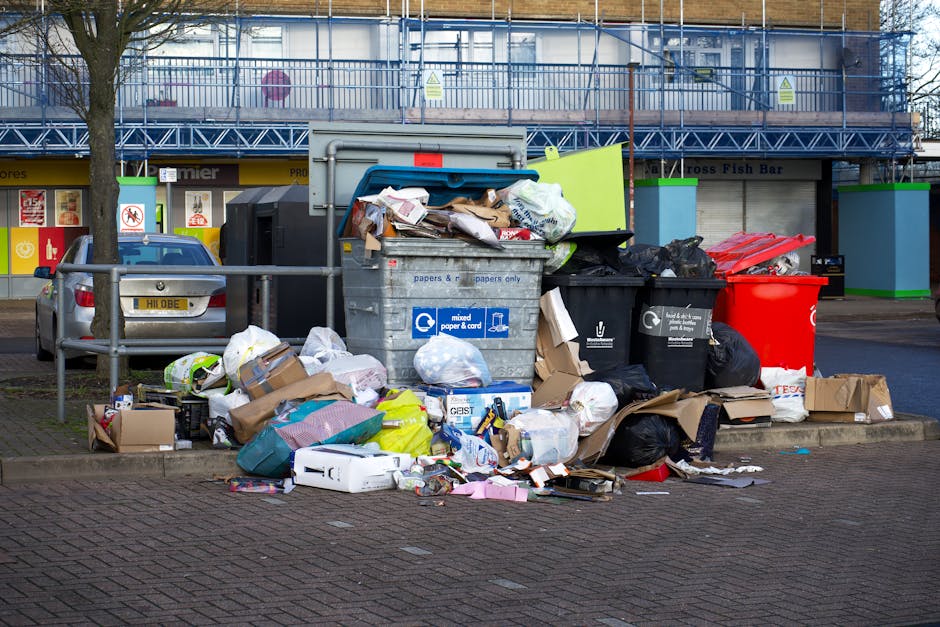
Insider tips for cheap rubbish collection Camden Market
If you are trying to sort out cheap rubbish collection Camden Market without making a mess of your day, you are not alone. Around Camden Market, waste can pile up fast: box after box from stalls, leftover packaging from busy trading hours, old fittings, broken display bits, and the odd awkward item that somehow never fits in the van. The challenge is finding a service that is genuinely affordable, quick, and sensible for a packed London area where access can be tight and time matters.
This guide gives you practical, insider-style advice on keeping costs down while still getting reliable rubbish removal. We will look at how pricing usually works, what affects the final bill, how to avoid unnecessary charges, and when it makes sense to book a collection instead of trying to handle everything yourself. If you want the straightforward version: cheap does not have to mean risky, and it certainly should not mean chaotic.
One thing you will notice in Camden is that the cheapest option on paper is not always the cheapest once you factor in waiting time, access issues, parking, or a van that turns up underprepared. That is where a bit of local know-how pays off.
Table of Contents
- Why cheap rubbish collection in Camden Market matters
- How the service works in practice
- Key benefits and practical advantages
- Who needs it and when it makes sense
- Step-by-step guidance
- Expert tips for better results
- Common mistakes to avoid
- Tools, resources and recommendations
- Law, compliance, standards and best practice
- Options and comparison table
- Case study and real-world example
- Practical checklist
- Conclusion
- Frequently asked questions
Why Insider tips for cheap rubbish collection Camden Market Matters
Camden Market is not a quiet, wide-road sort of place where a collection truck can glide in, load up, and disappear. It is busy, constrained, and often unpredictable. That matters because rubbish removal costs are shaped by real-world conditions, not just the amount of waste sitting in front of you.
For traders, stallholders, small businesses, and nearby residents, rubbish can become expensive in a hurry if it is left too long. Bags get heavier. Cardboard gets soggy. Mixed waste becomes harder to sort. And once items are scattered, you spend more time loading and more money on labour. Truth be told, that is how a "small clear-out" turns into a pricey job.
Insider tips help because they shift the focus from simply booking "the cheapest van" to planning the job properly. A well-planned collection can reduce time on site, avoid failed visits, and cut the risk of paying for space on the truck you never actually use. In a dense area like Camden, those little efficiencies really matter.
Expert summary: the cheapest rubbish collection is usually the one that is easiest to load, easiest to access, and easiest to quote accurately. Preparation beats haggling every time.
There is also the trust factor. When waste is handled badly, you can end up with mess left behind, items missed, or a provider who cannot explain disposal properly. A cheaper service that still follows sensible standards is the sweet spot. That is what this article is about.
How Insider tips for cheap rubbish collection Camden Market Works
At a basic level, rubbish collection is simple: you identify what needs to go, the provider estimates the volume or weight, the waste is loaded, and it is removed for disposal or processing. In practice, especially around Camden Market, the price depends on a few moving parts.
Most collection services look at:
- the amount of waste, often in cubic yards, load size, or number of items
- the type of waste, such as general rubbish, cardboard, bulky items, or mixed materials
- access conditions, including stairs, narrow lanes, pedestrian congestion, and parking
- labour required, particularly if items need to be carried from inside a unit or stall
- time on site, which can rise quickly if waste is not pre-sorted
That means the practical side of cheap rubbish collection is often about reducing friction. If the team can park nearby, if the waste is ready to lift, and if nothing dangerous or unusually heavy is hidden in the pile, the job tends to move faster. Faster jobs are usually easier to price well.
Some services charge per load, some by volume, some with a minimum call-out, and some by item. None of those models is automatically better. What matters is whether the pricing matches your situation. For example, a single bulky item may suit item-based pricing, while a back-room clear-out with mixed rubbish may be more economical as a load-based collection.
And yes, Camden access can complicate things. A tight street, loading restrictions, or a busy trading window can all affect timing. If you know the likely snag points in advance, you can explain them before booking. That one conversation can save a surprising amount of back-and-forth.
Key Benefits and Practical Advantages
Cheap rubbish collection is not only about saving money, although that is obviously a big part of it. Done properly, it also saves time, reduces stress, and keeps your trading space or property usable.
- Lower direct cost: you avoid paying for a full skip if you only need a partial load removed.
- Less disruption: a collection can often be quicker than arranging multiple trips yourself.
- Better space management: cleared floors, back areas, and storage zones make day-to-day work easier.
- Reduced manual effort: useful if you are dealing with awkward bags, boxes, or bulky items.
- Fewer compliance headaches: a professional collector should handle disposal in a responsible way.
There is also a hidden benefit: clarity. Once you have a clear waste routine, you stop wasting time guessing what can go, what must be separated, and what should be held back. That sounds small, but for a busy trader or landlord, it is the sort of thing that keeps the week moving.
If you are managing a premises with regular turnover, a tidy waste system can also improve presentation. Customers notice clutter. Staff notice clutter. And nobody enjoys working around a pile of flattened boxes that has started to smell a bit damp after a rainy Camden afternoon.
For some people, the best advantage is simply peace of mind. You book it, it goes, and the space is yours again. Simple as that.
Who This Is For and When It Makes Sense
This kind of service suits more people than you might think. It is not just for businesses clearing out a full unit or a landlord dealing with a post-tenancy mess. Around Camden Market, the need can be much more ordinary and much more frequent.
You may find it especially useful if you are:
- a stallholder clearing packaging, damaged stock, or display waste
- a small retailer with regular cardboard and mixed rubbish build-up
- a cafe, takeaway, or hospitality operator dealing with bulky waste or back-of-house clutter
- a landlord, managing agent, or property owner with leftover items after a move
- a resident clearing accumulated household rubbish or bulky items
- someone doing a one-off declutter before renovation or refurbishment
It makes sense when the volume is too much for ordinary bags or when you need items removed the same day or next day. It also makes sense when the waste is too awkward for your own vehicle, or when parking and lifting would become more trouble than they are worth.
Let's face it, there is a point where "I'll sort it tomorrow" stops being a plan and starts becoming a small obstacle course. If that sounds familiar, you are probably at the point where collection is the cheaper option overall.
Step-by-Step Guidance
Here is the simplest way to keep the job cheap without making it complicated.
- Sort the waste before you book. Separate cardboard, reusable items, general rubbish, and anything that needs special handling. The cleaner the mix, the easier it is to quote accurately.
- Estimate the volume honestly. Do not guess wildly. Walk the area and look at what is actually there. A small pile can grow into two loads once bags are opened.
- Take clear photos. Most providers can give a better estimate from photos than from a vague description. Include wider shots and close-ups.
- Check access details. Mention stairs, narrow entrances, loading restrictions, short-term parking limits, or any need to carry waste through a building.
- Ask what is included. Does the quote cover labour, loading, disposal, congestion-related delays, or heavy item lifting? Better to ask now than argue later.
- Book at a sensible time. If your street is busiest at lunchtime or during market peaks, a quieter slot may reduce delays. A calm morning can make all the difference.
- Prepare the collection point. Move waste close to the exit where possible, but only if safe and allowed. Clear the route. Remove anything you definitely want to keep.
- Confirm the waste type. If you have electronics, plasterboard, sharp items, or mixed construction waste, say so upfront.
A small bit of prep can shave off more cost than bargaining ever will. That is the insider part people often miss.
Expert Tips for Better Results
Here are the practical habits that tend to save money in the real world, especially in a busy London location.
1. Group similar waste together
Mixed waste usually takes longer to assess and load. If you can keep cardboard separate from general rubbish, and bulky items separate from loose bags, the job is cleaner and quicker. That alone can improve the quote.
2. Avoid half-filled bags and hidden weight
One common mistake is packing bags badly. A bag that looks light can turn out to be awkwardly dense, and dense waste eats up time. Flatten boxes, stack where possible, and do a quick sanity check before the team arrives.
3. Be realistic about access
Don't underplay a narrow staircase or a courtyard with no loading space. Providers usually know how London works. If you are upfront, they can plan properly. If not, you may get hit with extra time or a failed visit.
4. Compare like for like
Cheap quotes are only useful if they cover the same scope. Some include loading, some do not. Some include disposal, some separate it. A lower price can be misleading if it excludes the awkward bits.
5. Time the collection around your quietest period
If the site is a stall or trading unit, choose a window when staff are free and footfall is lighter. You want the team moving, not waiting. Waiting is where small jobs become expensive.
6. Keep reusable items out of the waste pile
If something can be reused, donated, or moved to storage, remove it before the collection day. Less volume means lower cost. Simple, but very effective.
And a small one from experience: it is always the last three broken chairs, somehow, that cause the most drama. Why is it always chairs? Nobody knows.
Common Mistakes to Avoid
A lot of people overpay for rubbish collection not because the service is inherently expensive, but because the job is set up badly from the start.
- Booking before sorting: if you have not separated waste, you may end up paying for more volume than needed.
- Hiding access issues: stairs, gates, narrow entries, or parking limits should never be a surprise on arrival.
- Forgetting bulky-item rules: one large item can change how the collection is priced and loaded.
- Assuming all waste is treated the same: food waste, electronics, rubble, cardboard, and mixed rubbish may be handled differently.
- Ignoring timing: a rush-hour collection around Camden can be slower than expected.
- Choosing only on headline price: the cheapest quote can become the most expensive if the scope is vague.
The biggest trap is probably this: people try to save money by being vague. That rarely works. Clear information usually gets the better deal. A bit annoying, maybe. But true.
Tools, Resources and Recommendations
You do not need special equipment to manage a cheap rubbish collection well, but a few simple tools make the process smoother.
- Phone camera: take photos of the pile from more than one angle.
- Measuring tape: useful if you need to estimate volume or check whether large items will fit through doors.
- Marker pen and labels: handy for marking what stays and what goes.
- Strong gloves: sensible for sorting, especially if there are sharp edges or dusty items.
- Basic inventory note: write down what is included so nobody guesses later.
If you are managing recurring waste, a simple log helps too. Nothing fancy. Just a note of what was removed, when it happened, and what caused the biggest cost. Over time, patterns appear. Usually the patterns are not glamorous, but they are useful.
If you need broader home, office, or trade clear-out support, you may also want to look at related services such as rubbish collection support for different property types or office clearance options where relevant to the kind of waste you are handling. Use the most fitting service for the job rather than forcing everything into one bucket. That tends to save money in the end.
Law, Compliance, Standards and Best Practice
When rubbish is collected, it should be handled responsibly. In the UK, businesses and householders both need to think carefully about waste being passed to the right person and taken to an appropriate facility. You do not need to become a compliance expert overnight, but you do need to be sensible.
For business waste, it is especially important to keep records where appropriate and to make sure the collector is authorised to handle the material. If you are arranging disposal from a commercial premises near Camden Market, do not just assume every provider follows the same standards. Ask clear questions.
Good practice usually means:
- describing the waste accurately before collection
- separating recyclable material where practical
- keeping hazardous or specialist waste out of general rubbish
- checking that waste is transferred to a legitimate disposal route
- avoiding fly-tipping risks by using a reputable, accountable provider
Some waste types need extra caution. Electronics, paint, chemicals, sharp materials, and certain building materials may require different handling. If you are unsure, say so. It is far better to pause and ask than to bundle everything together and hope for the best. Hope is not a waste strategy.
Best practice also includes site safety. Clear walkways, protect staff and customers from trip hazards, and avoid lifting anything too heavy without the right help. In a market environment, where people are constantly moving and space is limited, that matters more than it would on a quiet industrial estate.
Options, Methods, or Comparison Table
When people want cheap rubbish collection Camden Market, they usually compare three broad options: self-haul, skip hire, or man-and-van style collection. Each has a place, but each works best in different situations.
| Option | Best for | Strengths | Trade-offs |
|---|---|---|---|
| Self-haul | Very small loads and flexible schedules | Can be cheap if you already have transport | Time-consuming, parking and loading can be awkward |
| Skip hire | Larger projects with space to place a skip | Good for ongoing clear-outs and heavier waste | Needs space, permissions may be needed, not always ideal in tight areas |
| Man-and-van collection | Mixed rubbish, bulky items, quick removals | Fast, flexible, often best for Camden access | Price depends heavily on volume, access, and labour |
For many Camden Market scenarios, man-and-van collection is the most practical balance. It handles the awkward realities: narrow access, unpredictable timing, and loads that are too much for the boot of a car but too small for a skip. Still, if you have room and a longer project, a skip can be sensible. It depends on the shape of the job.
A quick rule of thumb: if the waste is sitting in one place and you can sort it easily, compare options carefully. If you need it gone fast and access is messy, flexible collection usually wins.
Case Study or Real-World Example
Here is a realistic example. A small Camden stall finishes a short seasonal run and needs to clear cardboard, damaged packaging, a few broken display items, and some general rubbish from the back area. The first instinct is to book a collection immediately and hope for the best. That would work, but not cheaply.
Instead, the trader sorts the waste into three piles: cardboard, reusable display items, and mixed rubbish. They flatten boxes, move the load close to the exit, and take photos from both the front and back access points. They also note that loading has to happen before the midday crowd thickens.
When the provider arrives, the job is straightforward. There is no guessing, no surprise staircase issue, and no time wasted on sorting. The result is a cleaner quote and less on-site labour. Nothing dramatic. Just a properly prepared job.
That is the point, really. Cheap rubbish collection is often cheaper because the customer has made it easy to do the work well. Not because someone has magically underpriced the market. If you can remove friction, you remove cost.
Practical Checklist
Use this before booking cheap rubbish collection in Camden Market.
- Have I sorted waste into clear categories?
- Do I know roughly how much needs collecting?
- Have I taken clear photos from more than one angle?
- Did I mention stairs, access limits, or parking issues?
- Have I checked whether any items need special handling?
- Is the collection area safe and easy to reach?
- Have I removed anything I want to keep?
- Do I understand what the quote includes?
- Have I asked about labour, disposal, and timing?
- Have I chosen a sensible collection window?
If you can tick most of those off, you are in a strong position. The collection is likely to be quicker, cleaner, and more cost-effective. Nice and boring, which is exactly what you want with waste removal.
Conclusion
The smartest way to approach cheap rubbish collection Camden Market is to treat it like a small logistics task, not just a one-off pickup. Sort the waste, describe the access properly, compare like for like, and choose a provider that understands the realities of the area. That is where the real savings usually come from.
You do not need to overcomplicate it. A little planning goes a long way, and in Camden that can mean the difference between a smooth clearance and a frustrating afternoon of waiting around while the street fills up. Better to be prepared than sorry, as they say.
If you are ready to clear space, reduce clutter, and keep costs sensible, take the time to compare your options carefully and ask the right questions before you book.
Get a free quote today and see how much you can save.
Frequently Asked Questions
What is the cheapest way to arrange rubbish collection in Camden Market?
The cheapest method is usually the one that matches your waste type and access conditions properly. For small, mixed, or awkward loads, a flexible collection can be cheaper than hiring a skip. For larger, predictable volumes, compare both options carefully.
Does sorting rubbish before collection really save money?
Yes, it often does. Sorting cardboard, general rubbish, and bulky items can reduce loading time and make quoting more accurate. Less time and less guesswork usually means a better price.
How do I avoid surprise charges?
Be upfront about the amount of waste, access issues, stairs, parking restrictions, and any heavy or unusual items. Ask exactly what the quote includes so you are comparing the same level of service.
Is rubbish collection better than skip hire for Camden Market?
It depends on the job. In a tight, busy area, collection can be much easier because you do not need space for a skip. For bigger clear-outs with room to spare, a skip may still be more practical.
What kind of waste is easiest to collect cheaply?
Clean, separated waste such as flattened cardboard, bagged general rubbish, and standard household items is usually easiest. Mixed waste or items that need special handling can cost more.
Can I save money by moving the rubbish outside first?
If it is safe and allowed, moving waste close to the exit can reduce labour time. But do not block public paths or create hazards. Safety and access come first.
How important are photos when asking for a quote?
Very important. Clear photos help the provider estimate volume and identify access issues. It is one of the quickest ways to get a realistic price without a wasted visit.
What should I ask before booking?
Ask what the quote covers, how the waste will be charged, whether labour is included, and what happens if access is more difficult than expected. Those questions prevent most misunderstandings.
Can businesses in Camden Market use the same service as households?
Often yes, but business waste may involve extra record-keeping or different handling expectations. It is sensible to explain whether the rubbish comes from a commercial or residential setting.
What if I have a small amount of rubbish but awkward access?
Even a small load can take time if access is poor. Mention the access clearly when enquiring. Sometimes a provider can still offer a fair price, but they need the full picture first.
Do I need to separate recyclable items?
Where practical, yes. Separating recyclable materials can improve efficiency and may reduce the amount of mixed waste being charged. It also supports better disposal practice overall.
How far in advance should I book?
If the job is straightforward, a short notice booking may be fine. If you are working around trading hours, busy streets, or multiple waste types, giving a bit more notice usually helps everything run more smoothly.
When rubbish is handled well, the whole space feels lighter. Less clutter, less stress, fewer surprises. And honestly, that quiet sense of relief is worth quite a lot.