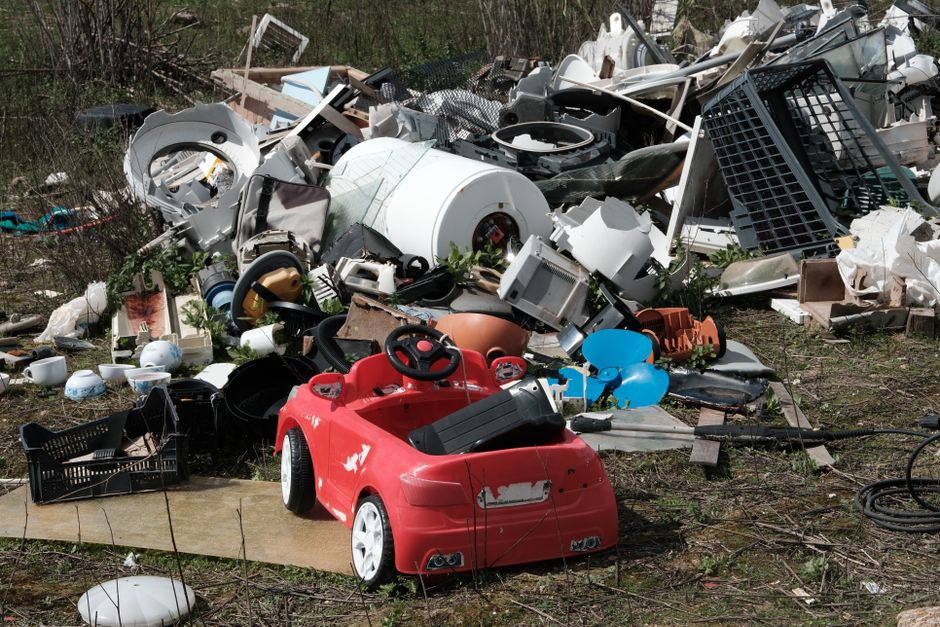
Common problems with bulky rubbish disposal Central London

Bulky rubbish sounds simple until you actually have to move a sofa down three flights of stairs, squeeze an old wardrobe past a narrow hallway, or work out where a broken mattress can legally go. In Central London, those little complications stack up fast. The result? Delays, extra costs, access issues, missed collections, and a lot of frustration. If you are dealing with common problems with bulky rubbish disposal Central London, this guide breaks down what usually goes wrong, why it happens, and how to avoid the usual headaches without making a day of it.
Whether you are clearing out a flat, a home, an office, or a storage space, the same pain points tend to show up: tight access, parking restrictions, building rules, awkward items, and uncertainty about what counts as bulky waste. Let's face it, London has a way of making simple jobs feel oddly complicated. The good news is that most of these problems can be handled with a little planning and the right approach.
Why Common problems with bulky rubbish disposal Central London Matters
Bulky waste is not just "big rubbish". It is the awkward stuff that does not fit in a standard bin and often needs lifting, carrying, loading, and responsible disposal. In Central London, that means the job is shaped by real-world constraints: busy roads, limited loading space, shared entrances, stair-only buildings, lift bookings, and residents or neighbours who would rather not hear a wardrobe scraping down the corridor at 7 a.m.
The problems matter because they affect time, money, safety, and compliance all at once. A missed collection can leave a hallway blocked for days. A bad lift can damage communal areas. An underprepared collection can mean a second visit, which is usually the bit nobody enjoys. If you are managing a larger clear-out, the knock-on effect can slow down a move, a refurbishment, or a tenancy handover. That is especially true in dense areas around Central London, where access is often tighter than the item itself.
There is also a practical trust issue. People want their waste dealt with properly, not dumped, not delayed, and not handled in a way that causes trouble later. In our experience, the most stressful bulky rubbish jobs are rarely the biggest ones; they are the ones where nobody checked the access, the item sizes, or the disposal route before starting. Small oversight, big headache. It happens all the time.
For many households and businesses, the real challenge is not deciding to clear the waste. It is figuring out the cleanest, least disruptive way to do it. That is why many readers also look at related services such as rubbish removal, waste clearance, and waste collection when they need a practical solution rather than a DIY weekend.
How Common problems with bulky rubbish disposal Central London Works
At a basic level, bulky rubbish disposal works in three stages: identify what needs removing, get it out of the property safely, and send it to the right disposal or recycling route. Simple enough on paper. The problems start when the property layout, the item type, or the timing gets in the way.
Typical bulky items include sofas, wardrobes, mattresses, desks, shelving, white goods, dismantled fittings, garden furniture, and the odd thing that has sat in a garage for years and somehow grown heavier. If you are clearing out a larger space, related services like furniture disposal or sofa removal can make the process much easier because they are designed around handling larger, awkward household items.
In Central London, the process usually also depends on access conditions. Can a vehicle stop nearby? Is there a concierge or building manager involved? Is there a lift large enough to use? Are there restrictions on collection times? These details sound minor until you are halfway through a move and realise the lift is too small for the item to turn. Then it becomes a problem very quickly.
A good bulky waste clearance job normally includes a quick assessment, sorting for reuse or recycling where possible, a safe route out of the property, and an appropriate load-up method. If you are dealing with mixed items from a flat, a garage, or an entire property, services such as flat clearance, house clearance, or home clearance may be more relevant than a simple one-item pickup.
For commercial premises, the same logic applies but the risks can be different. Offices, shops, and light industrial spaces often generate bulky waste during refits, relocations, or end-of-lease clean-outs. In that setting, a planned approach through office clearance or business waste is usually the more efficient route.
Key Benefits and Practical Advantages
When bulky rubbish disposal is handled properly, the benefits are immediate and very noticeable. You get your space back, you reduce clutter, and you avoid the slow creep of items piling up in corners, hallways, or basements. You will notice the difference the moment the room is clear. It is one of those rare jobs where the before-and-after effect is obvious without needing a dramatic explanation.
- Safer movement through the property: less risk of trips, blocked fire routes, or damage to walls and floors.
- Less stress on the day: fewer surprises, fewer awkward lifts, and fewer "we can't get that through there" moments.
- Better use of time: especially useful when you are moving house, renovating, or preparing a property for new occupants.
- More suitable disposal: bulky items may need specific handling rather than being treated as general rubbish.
- Cleaner shared spaces: important in flats, managed buildings, and offices where common areas matter.
There is also a planning advantage. Once you have removed the bulky items, you can properly assess what stays, what goes, and what needs replacing. That can be helpful for landlords, property managers, and anyone handling a tidy-up after long-term occupancy. One messy room often hides three smaller jobs underneath it. Clear the big stuff first, and the rest is usually easier.
If you are comparing different approaches, a broader rubbish clearance service can be useful when the load includes both bulky and lighter mixed waste. Likewise, if the items are more general disposal than furniture-specific, waste removal may fit the situation better.
Who This Is For and When It Makes Sense
Bulky rubbish disposal is not only for people doing a full clearance. It makes sense any time an item is too large, too awkward, or too inconvenient to handle through normal bin collections. That could be a single sofa after a furniture upgrade, or it could be several rooms' worth of mixed items after a move.
Common users include:
- Homeowners replacing large furniture or clearing out lofts, basements, or garages
- Tenants who need to leave a property tidy and free of leftover items
- Landlords and agents dealing with end-of-tenancy or abandoned contents
- Office managers handling desks, chairs, filing cabinets, and outdated equipment
- Builders and renovators with broken fixtures, packaging, and site debris
- Business owners needing a tidy, fast reset before reopening or reconfiguring the space
If your space is particularly cluttered, you may find a more structured approach through garage clearance or garden clearance. These jobs often include bulky items alongside general mess, which is where planning really matters.
In apartment buildings across places like Shoreditch or Clerkenwell, bulky item removal often needs a careful timing plan because shared entrances are busy and access is rarely wide open. Around Bloomsbury or Kings Cross, the same issue can be compounded by controlled access and narrow loading windows. Not impossible. Just not casual, either.
Step-by-Step Guidance
Here is a straightforward way to approach bulky rubbish disposal without turning it into a full-scale project.
- List every item clearly. Include size, weight, and whether it can be dismantled. A wardrobe that breaks down into panels is a very different job from one solid unit.
- Check access. Measure doorways, lifts, stairwells, and corridors. In older London properties, those measurements matter more than people expect.
- Separate reusable, recyclable, and general waste. Some items may be better suited to reuse or reuse-adjacent routes rather than straight disposal.
- Confirm timing and parking. If a vehicle needs to stop close to the building, plan for it. Parking in Central London is not a wing-it situation.
- Protect the route out. Use floor protection, corner guards, and enough hands to move items safely.
- Load in a sensible order. Heavy or awkward items first, lighter items around them, and breakable pieces protected.
- Dispose properly. Make sure the items are taken to an appropriate facility or collection route.
If this feels like over-prepping, it really is not. The few extra minutes spent planning often save you an hour of cursing at a hallway turn. Been there, heard the sighs, seen the scratch marks. Better to avoid all that.
For bigger projects, combining methods can help. For example, a flat clear-out might involve a general flat clearance supported by specific item handling such as furniture disposal. That tends to be more efficient than treating every object as a separate problem.
Expert Tips for Better Results
The best bulky waste jobs are the ones that feel calm. Not rushed, not chaotic, just quietly efficient. A few habits make that much more likely.
- Measure before you move. If an item only just fits through a doorway, it probably does not fit in real life once angles and hands are involved.
- Disassemble early. Remove legs, doors, drawers, and loose shelves before moving. It reduces weight and awkwardness straight away.
- Photograph awkward items. This helps with planning and avoids misunderstandings later.
- Keep hallways clear. One bag left in the wrong place can slow down the whole load-out.
- Use the right service type. Mixed waste is not the same as furniture-only waste, and office clearance is not the same as a house clear-out.
One practical tip that often gets overlooked: think about noise and neighbour impact. Dragging, banging, and repeated door holds can create friction in shared buildings, especially during early mornings or late afternoons. A quieter, more controlled approach usually goes better with everyone involved. Small thing, but it matters.
If you are clearing a commercial site or a business unit, pairing the job with office clearance or business waste can reduce the chance of items being left behind because someone assumed "the other person" was handling them. That happens more than people admit.
Common Mistakes to Avoid
Most bulky waste problems come from a handful of predictable mistakes. If you avoid these, the whole process gets much smoother.
- Leaving access planning too late. This is the big one. If the item can't get out easily, the job becomes slow and expensive.
- Assuming all bulky items are the same. A mattress, a sofa, and a cupboard are all "large", but they behave very differently.
- Ignoring shared-building rules. Lift bookings, quiet hours, loading bay restrictions, and concierge procedures are real constraints.
- Not checking whether items can be dismantled. Many people skip this, then wonder why the job is taking so long.
- Mixing everything together. If the load contains metal, wood, textiles, and general waste, sorting it in advance can save time.
- Underestimating how heavy "old furniture" is. Older furniture can be surprisingly dense. A bit like a suitcase full of regret.
Another common issue is overlooking where items are being kept before collection. Storing bulky rubbish in an entrance hall or communal landing can be inconvenient and, in some buildings, simply not allowed. Better to stage items in one planned spot if you can.
When the space is especially cluttered, using a more complete service such as house clearance or home clearance can be more practical than trying to manage item-by-item decisions yourself.
Tools, Resources and Recommendations
You do not need specialist equipment for every job, but a few basic tools and habits make bulky rubbish disposal safer and easier.
| Tool or resource | Why it helps | Best used for |
|---|---|---|
| Measuring tape | Checks door widths, lift sizes, and tight turns before moving items | Flat removals, furniture, stairwells |
| Protective blankets or floor covers | Reduces scuffs and impact damage | Shared hallways and internal routes |
| Basic hand tools | Helps dismantle furniture and fittings | Wardrobes, desks, shelving, beds |
| Trolley or sack barrow | Makes heavier items easier to move short distances | Ground-floor or loading-bay access |
| Clear labelling | Reduces confusion about what stays and what goes | Mixed household or office clear-outs |
Useful recommendation: if the job contains mostly broken household items, general rubbish collection can be enough. If the load is heavier, larger, or more mixed, a fuller waste removal approach is usually a better fit.
For properties with awkward storage spaces, such as old basements or tight garages, starting with garage clearance is often the easiest way to reduce the bulk before you deal with the rest of the property. One job unlocks another. That's the rhythm of it.
Law, Compliance, Standards, or Best Practice
Bulky rubbish disposal should always be handled responsibly. While the exact rules can depend on the item type and who is arranging the work, the basic best practice is straightforward: do not leave waste in unauthorised places, do not assume "someone else" will deal with it, and make sure the items go to a legitimate disposal route.
For businesses, there is usually a stronger expectation around proper handling, record-keeping, and duty of care. That is especially relevant when bulky waste includes mixed materials, office equipment, or items removed during a fit-out. If you run a workplace, using a structured service such as business waste or office clearance is often the safest, tidiest way to stay on top of things.
For households, the main compliance concerns are usually about fly-tipping avoidance, safe handling, and shared-space etiquette. In flats and managed buildings, there may also be building rules about storage, collection timing, or access routes. Those rules can be annoying, yes. But they are there for a reason, and ignoring them can create avoidable problems very quickly.
Best practice in one line: plan the route, separate the items, respect the building, and make sure the waste goes where it should. Simple, but not always easy.
If you are unsure whether something needs special handling, it is better to ask before moving it. That small pause can save a lot of hassle later. Truth be told, the safest jobs are the ones where nobody tries to be heroic with a heavy object.
Options, Methods, or Comparison Table
There is more than one way to deal with bulky rubbish, and the right choice depends on access, volume, urgency, and the type of item involved.
| Method | Best for | Pros | Watch out for |
|---|---|---|---|
| DIY removal | Small items, easy access, simple loads | More control over timing | Heavy lifting, vehicle access, disposal responsibility |
| Targeted item removal | Single items like sofas, mattresses, desks | Focused and efficient | May not suit mixed loads |
| Full clearance service | Multiple rooms, mixed bulky items, time-sensitive jobs | Less stress, better coordination | Needs clear item list and access info |
| Office or business clearance | Workplaces, commercial units, refits | Better for mixed business waste | Requires proper scheduling and site coordination |
For many Central London properties, the full-clearance route is simply the most realistic option. Narrow stairs, limited parking, and time pressure make a "we'll just wing it" approach less appealing than it sounds. If you are weighing up your options, rubbish removal is useful for straightforward jobs, while waste disposal is better thought of as the final endpoint rather than the whole process.
Case Study or Real-World Example
A typical Central London scenario goes like this. A tenant is moving out of a third-floor flat near a busy high street. There is an old sofa, a dismantled bed frame, a broken chest of drawers, and a couple of bags of mixed household waste. The lift is small. The stairwell is narrow. The building allows collections only during a short daytime window.
At first glance, it feels manageable. Then the sofa turns out to be too wide for the lift, one drawer is stuck shut, and the hallway is already busy with neighbours coming and going. Without planning, the whole thing becomes slow and stressful.
The better approach is simple: measure the access, separate the items, dismantle what can be dismantled, and remove the load in the right order. The sofa goes through a dedicated sofa removal route, the remaining furniture is grouped for furniture disposal, and the mixed bags are handled as part of a broader waste load. That way the clear-out is tidy, the route stays protected, and the property is left ready for handover.
It is not glamorous work. But it is effective. And sometimes that is exactly what matters most.
Practical Checklist
Use this checklist before arranging bulky rubbish disposal in Central London.
- Identify every bulky item that needs removing
- Measure doors, hallways, lifts, and stairwells
- Check whether any items can be dismantled safely
- Separate furniture, general waste, and anything reusable
- Confirm building access rules and collection timings
- Plan where items will be staged before removal
- Protect floors, walls, and communal areas if needed
- Arrange the right service type for the load
- Make sure parking or loading access is realistic
- Keep the route clear on the day
If you can tick most of those off, you are already ahead of the usual messy start. That alone makes a big difference.
Conclusion
The common problems with bulky rubbish disposal Central London tend to be less about the waste itself and more about everything around it: tight access, parking constraints, awkward building layouts, mixed item types, and the pressure of doing it all quickly. Once you understand those friction points, the job becomes much more manageable.
The simplest path is usually the best one: plan access, separate items properly, use the right service type, and avoid last-minute improvisation. Whether you are clearing one bulky item or an entire room, a little preparation saves a lot of stress. And in a city like London, that is no small thing.
For a more straightforward experience, many people choose a service that can handle the lifting, sorting, and disposal in one go. If that sounds like the sensible route, you are probably thinking about it the right way.
Get a free quote today and see how much you can save.
Sometimes the best bit of a clear-out is the moment you stand in the room afterwards and realise how much lighter it feels. Quiet, empty, and finally done.
Frequently Asked Questions
What are the most common problems with bulky rubbish disposal in Central London?
The biggest issues are restricted access, narrow staircases, limited parking, awkward item sizes, shared building rules, and not knowing which disposal method is suitable for the load.
Can I leave bulky rubbish outside my building for collection?
Usually not without checking building rules and local arrangements first. In many Central London settings, leaving items in communal or public areas can create safety issues or cause complaints.
Do I need to dismantle furniture before removal?
Not always, but it often helps. Dismantling large items such as wardrobes, beds, and desks can make them easier to move through tight spaces and reduce the chance of damage.
Is bulky waste disposal different from standard rubbish removal?
Yes. Bulky waste typically needs more lifting, more space, and more planning. Standard rubbish removal is often better for lighter mixed waste rather than oversized furniture or fittings.
What should I do if my flat has a very small lift?
Measure the lift against the item before moving anything. If the item will not fit safely, plan to dismantle it or choose an alternative route. A small lift can change the whole job.
How do I know if I need a full clearance service?
If you have several bulky items, mixed waste, limited time, or difficult access, a full service is often the easier choice. It is especially useful for flats, houses, garages, and offices with more than one area to clear.
What happens if bulky rubbish is mixed with other waste?
Mixed loads can still be handled, but they may need sorting first. Separating furniture, general waste, and recyclable material usually makes disposal more efficient and less confusing.
Are office bulky waste jobs handled differently from home clear-outs?
They are often similar in principle, but office jobs usually involve more planning, more coordination, and a stronger need for proper handling of equipment and business waste.
How can I avoid damage to walls and floors during removal?
Protect the route, clear obstacles, use enough people for the lift, and avoid rushing corners or stair turns. A careful pace is usually faster than repairing scuffs later.
What is the best option for one large sofa or mattress?
A dedicated item service such as sofa removal or furniture disposal is often the most practical approach when the load is small but awkward.
Does bulky rubbish disposal take a long time in Central London?
It depends on access, item type, and building rules. A straightforward ground-floor job can be quick, while a top-floor flat with a tight staircase will naturally take longer.
Can garden waste count as bulky rubbish?
Sometimes, yes. Large branches, broken outdoor furniture, planters, and other oversized items may be handled as part of a broader clearance, often through garden clearance or waste removal.
Who should I contact if I need help with a mixed clear-out?
If the job includes furniture, general waste, or items from more than one room, a service that covers waste clearance, rubbish removal, or a full home or flat clearance is usually the most useful starting point.